
The Ganja Bottle House
A Folk Masterpiece of Memory and Glass
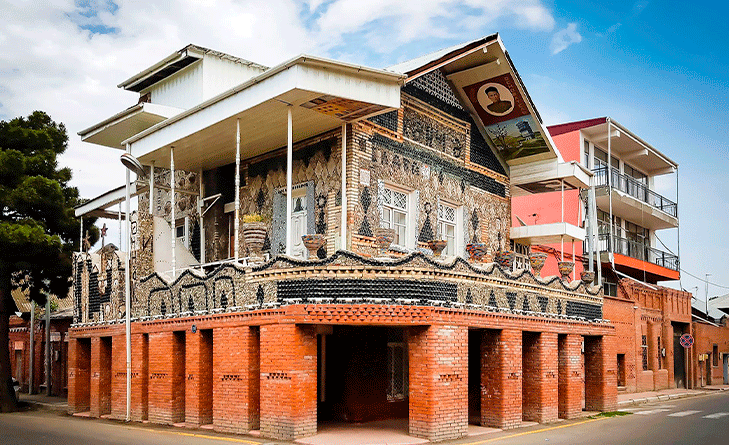
The Bottle House is a glittering mosaic of glass and memory that can be seen in the center of Ganja, which is the second-largest city in Azerbaijan. This edifice is unlike any other in the region or anywhere else in the region. Not only is this house a peculiar structure constructed from recycled materials, but it is also a very personal monument, a stunning accomplishment of folk architecture, and a one-of-a-kind emblem of post-war resiliency and ingenuity.
An average citizen with an incredible vision, Ibrahim Jafarov, was the one who built the Bottle House between the years 1966 and 1967. As a tribute, this was not merely an architectural experiment or a pastime; rather, it was a tribute. In honor of his brother, who was reported missing in action during World War II, the house was constructed in his memory.
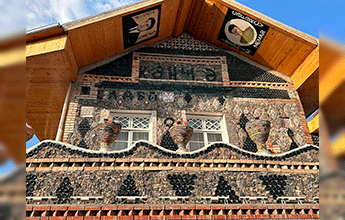
In place of more traditional building materials, Jafarov constructed the walls, facades, and ornamental features of the structure out of more than 48,000 glass bottles that were collected from the surrounding village. The end result is breathtaking: light reflects off of the rainbow glass surfaces, producing shimmering reflections that shift throughout the day. Some of the bottles still have their original labels on them, which gives the atmosphere of the house a textured, almost patchwork-like aspect.
It is more accurate to describe the Bottle House as an open-air folk art installation, despite the fact that it is referred to as a residential structure. It combines artistic storytelling with functional structure, creating a space that blurs the border between sculpture and architecture. Inscriptions and mosaics constructed from bottle fragments and tiles are used to embellish the façade of the building. Many of these mosaics and inscriptions highlight patriotic symbols, quotations, and motifs that honor veterans and national pride.
The fact that the Bottle House was constructed totally by hand is one of the most impressive aspects of this structure. Without having any professional background in architecture or engineering, Jafarov was able to construct a design that was unified and expressive. He also sourced each bottle himself, cleaned and organized them with precision, and created the design.
Long before the term "sustainability" became a buzzword, the Bottle House established a precedent for the innovative reuse of materials and the knowledge of environmental issues involved. Jafarov was able to translate his sorrow into a message of peace and preservation by transforming something that the majority of people would perceive to be rubbish into something that is beautiful and long-lasting.
Today, the Bottle House serves as a calm yet intriguing counterpoint to the monuments that date back to the Soviet era and dominate the urban environment of Ganja. Evidence that memory can be represented not only via words or monuments, but also through everyday materials and earnest effort, it is profoundly human, emotionally intimate, and universally motivating. It is a demonstration that memory can be expressed.
In spite of the fact that it is not well-known outside of Azerbaijan, the Bottle House has become a treasured monument in the country. Domestic tourists as well as tourists from other countries who are looking for cultural experiences that are somewhat off the beaten path are drawn to the area. tourists frequently comment on the emotional resonance the house possesses, particularly when they understand the narrative behind it. Guided tours are occasionally conducted by local volunteers or residents, and tourists frequently comment on the house's emotional resonance.
In a nation whose history is so frequently presented through the prism of empire, conflict, or oil money, the home has also sparked talks about the preservation of heritage, the innovation of folk art, and the significance of personal storytelling.
The Ganja Bottle House is more than simply a curiosity; it is a moving illustration of how personal sorrow, creative vision, and cultural identity can come together to create something that will be remembered for a long time. The structure was constructed without any fanfare or money, and it is now considered to be one of the most remarkable monuments of memory in Azerbaijan.
We are reminded by the Bottle House that some of the most influential landmarks are not constructed out of marble, but rather out of meaning. The Bottle House is a glass structure that shines in the sunlight and repeats a story of love, sorrow, and creation.