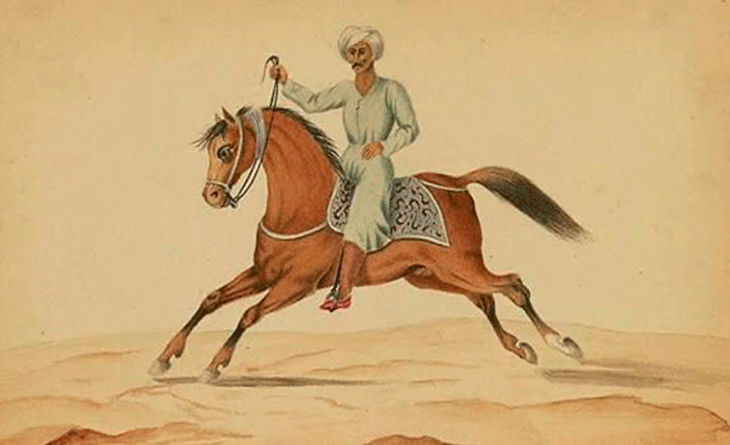

The Turkish Roots of Horse Riding
The history of horse riding is deeply intertwined with the development of steppe civilizations, and among them, the Turks occupy a central position. Emerging from the vast grasslands of Central Asia, Turkic peoples not only domesticated and bred horses but also developed techniques of riding, training, and warfare that influenced Eurasian history for centuries. Their equestrian culture shaped their social structures, military strategies, and even their spiritual beliefs, leaving a legacy that endures to the present day.
Early Domestication and the Steppe Environment
The Central Asian steppe provided the natural conditions for the domestication and breeding of horses. Archaeological evidence from regions inhabited by early Turkic tribes, including the Altai Mountains and the Orkhon Valley, suggests that horses were integral to Turkic life as early as the first millennium BCE. Unlike agrarian societies, steppe communities depended on mobility, and horses were indispensable for transportation, herding, and subsistence activities such as hunting.
Turkic children were reportedly trained to ride at a very young age, reflecting the cultural importance of equestrian skills. Horses provided milk (in the form of fermented mare’s milk, kymyz), meat, hides, and transport, making them central to both survival and identity.
Military Innovation and Cavalry Traditions
One of the most significant contributions of the Turks to world history was the development of advanced cavalry tactics. Mounted archery, a technique in which riders could fire arrows accurately while at full gallop, became a hallmark of Turkic military power. Chinese, Persian, and later Byzantine sources frequently commented on the speed, endurance, and tactical sophistication of Turkic horsemen.
By the 6th century, during the rise of the Göktürk Khaganate, Turkic cavalry forces had become a dominant military presence in Central Asia. Their strategies emphasized mobility, surprise attacks, and coordinated maneuvers, which allowed them to challenge and often overwhelm sedentary empires. This military model was later adopted and refined by successor states such as the Seljuks and Ottomans, whose cavalry units (such as the Sipahis) played decisive roles in regional and global conflicts.
Social and Cultural Significance
The horse was not merely a military asset but a marker of social status and cultural identity. Ownership of horses signified wealth and power, while breeding fine horses was a source of prestige. The Akhal-Teke, a breed originating in the Turkmen regions, became renowned for its endurance and beauty and was sought after by rulers from Persia to China.
Horses also held symbolic and spiritual significance in Turkic belief systems. In ancient Turkic shamanistic traditions, horses were considered intermediaries between the human and spiritual worlds. Burial practices often included the sacrifice of horses alongside warriors, signifying their role as companions in both life and death.
Influence Beyond the Steppe
As Turkic peoples migrated and expanded westward, they carried their equestrian culture with them. The Seljuks introduced mounted warfare techniques into the Middle East, reshaping the military landscape of the Islamic world. The Ottomans, inheriting these traditions, institutionalized cavalry units that became integral to their imperial expansion across Anatolia, the Balkans, and beyond.
The impact of Turkic horse culture was also felt in Europe and Asia more broadly. Contacts with Turkic nomads influenced the military practices of neighboring peoples, from the Chinese dynasties defending against steppe incursions to European knights who eventually adopted more mobile cavalry tactics.
Contemporary Legacy
Although industrialization and modernization reduced the practical role of horses in daily life, equestrian traditions remain important in Turkic societies today. Traditional games such as Kökbörü (a form of horseback competition) and mounted archery festivals preserve historical skills and cultural memory. Furthermore, horse imagery continues to appear in Turkic art, literature, and national symbolism, demonstrating the enduring significance of this ancient relationship.
The Turkish roots of horse riding are not only a matter of cultural pride but also a crucial historical reality. From the early domestication of horses on the steppe to the development of mounted warfare and the spread of equestrian traditions across Eurasia, Turkic peoples played a defining role in shaping the human-horse relationship. Their mastery of horsemanship allowed them to build empires, influence neighboring civilizations, and create a cultural heritage that remains relevant in the modern era.