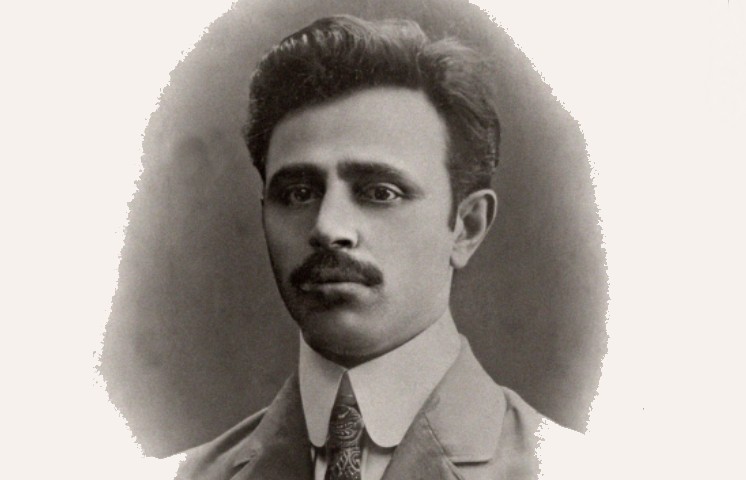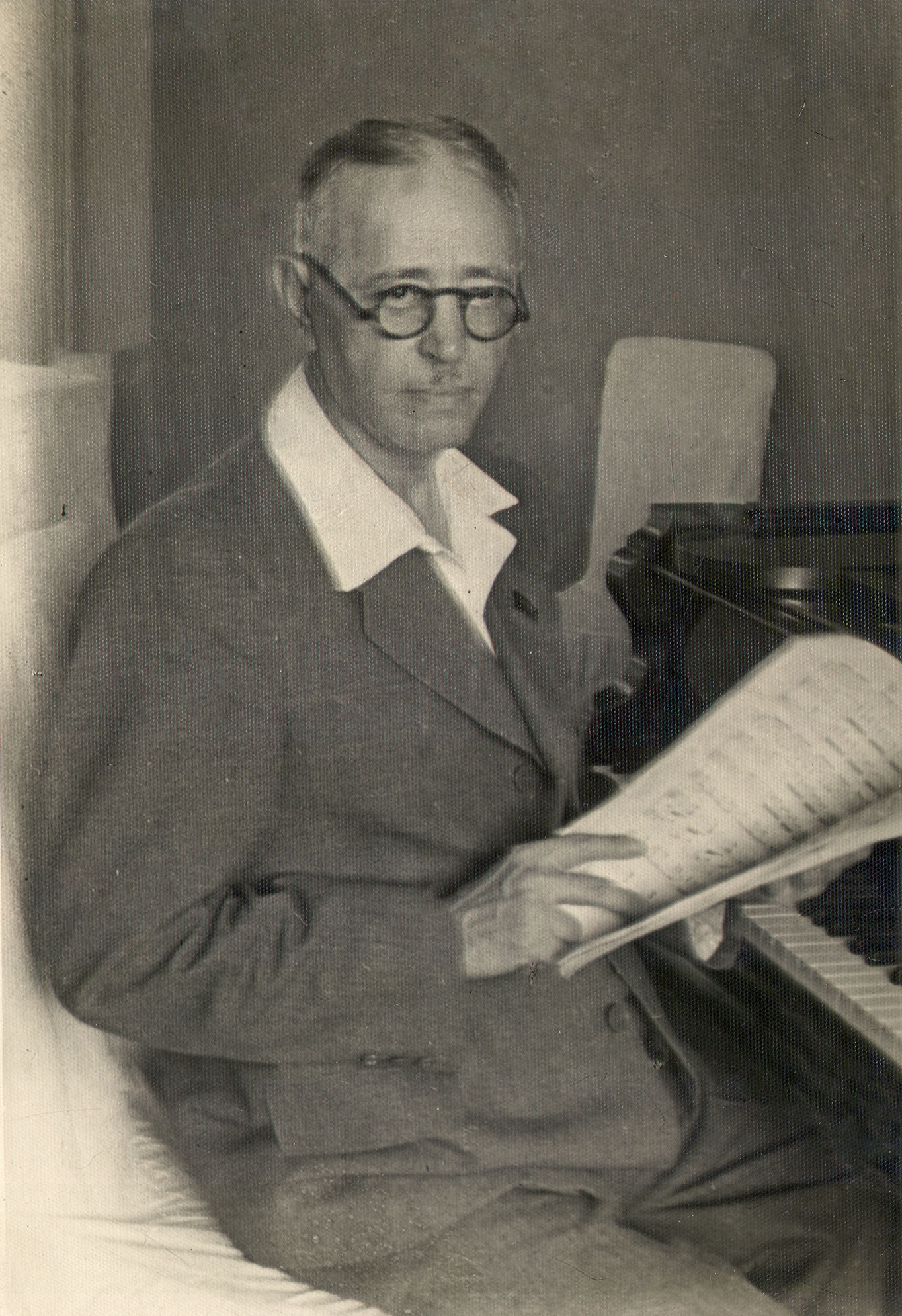

Uzeyir Hajibeyli
Uzeyir Hajibeyli is one of the most prominent figures in Azerbaijani music history. Composer, conductor, musicologist, and public figure - his contribution to Azerbaijani culture and society is invaluable. The first classical opera in the East “Leyli and Majnun”, an orchestra of folk instruments, Azerbaijani classical choir, and the establishment of Azerbaijani secondary music school are among many of his achievements. Thanks to his efforts, even in the most remote villages, oral folklore was translated into notation, which laid the foundation for the academic study of Azerbaijani folklore. His comprehension of classical music following secular education, as well as profound knowledge of centuries-old Azerbaijani folk genre mugham shaped his unique, one-of-a-kind musical compositions. Hajibeyli presented the results of his research into national musical folklore in a comprehensive theoretical study titled "Basics of Azerbaijani Folk Music". He headed the Musical Technical College and then took over the Baku Conservatory.
«...
Hajibeyli spent his whole life devoted to the development of Azerbaijani Soviet
musical culture. ... He laid the foundation of the Azerbaijani opera art for
the first time in the republic and organized music education. He contributed a
lot of work to the development of symphony music» -D. Shostakovich.
Born on
September 18th, 1885 in Agjabedi, and later moved to Shusha, which is called
the Caucasus Conservatory, Uzeyir was greatly influenced by Khurshid Banu
Natavan, the Azerbaijani lyric poet, called “the princess of Karabakh”, as she
was the daughter of the last ruler of Karabakh khanate. Young Uzeyir received a
secular education in a madrasah and a two-year Russian-Tatar school. The
Hajibeyov family, known for their musical talent, aimed to provide him with a
well-rounded education - he studied both Persian and Arabic. His formation as a
musician was deeply influenced by Shusha, the musical cradle of Karabakh.
He soon
entered the Transcaucasian Teacher’s Seminary in Gori established by the
Russian Empire. Hajibeyli's worldview was greatly influenced by his years of
study at the seminary, where he gained knowledge of classical works from Russia
and Europe, learned to play the violin, and recorded folk music samples on
notes. Creative and pedagogical intelligentsia formed his progressive views. He
worked as a correspondent and was appointed as a teacher in Hadrut village in
Karabakh, but was forced to leave due to the religious outrages against Muslims
in the area. That's how he came to Baku. The First Russian Revolution and other
public political events had a significant impact on young Uzeyir. It was then
that he focused mainly on musical creativity. At one point, he came up with an
ambitious idea to create an opera based on Mugham art. Thus, January 25, 1908
is considered the birthday of the first Azerbaijani opera and the first opera
in the Muslim East. The storyline was based on a poem by Fizuli «Leyli and
Madjnun». The use of mugham aspects in the opera was outstanding for such a
young composer. With the help of friends and passionate enthusiasts of his
native art, Hajibeyli staged the first opera in Baku.
“When
writing the opera, as the author, I knew only the fundamentals of solfeggio and
did not know harmony, counterpoint, or musical forms. The success of «Leili and
Medjnoun» was remarkable, though. My understanding is that the Azerbaijani
people have been anticipating the debut of their Azerbaijani opera on stage,
and in «Leili and Medjnoun», there was a synergy of genuine folk music and a
popular classic plot.”
The
premiere was held at the H.Z. Taghiyev Theatre. The first Azerbaijani mugham
opera became both the first opera in the Middle East and the first opera in the
Muslim world.
“It
should be noted that the first Azerbaijani opera was based on «Leili and
Medjnoun» poem by Fizuli, whose poetry the composer nurtured a great love for,
which is manifested in other works. I believe that Uzeyir's contribution to
Azerbaijani music development is comparable, to the impact of the founders of
the Azerbaijani literary language in the development of national literature.”
-F.Amirov
The success
of the first opera prompted Hajibeyov to continue his work vigorously. Over the
next five years, he created three musical comedies: «Husband and Wife» (1909),
«If not that one then this one» (1910), «Arshin Mal Alan» (1913), and five
mugham operas: «Sheikh Sanan» (1909), «Rustam and Zohrab», 1910), «Shah Abbas
and Khuru (1912). Getting closer to the aesthetic and artistic tastes of the
people, he also strongly criticized patriarchal practices and social
backwardness, highlighting issues such as women’s freedom of thought and
rights. Thanks to his support, the first Azerbaijani female opera singer
Shovkat Mammadova was able to perform Italian compositions in the same theater
of Z.Hajiyev, as well as many other young talents whom he discovered. The
application of the achievements of significant European professional composers
in the national musical culture, the introduction of new types of performances,
the system of musical education, and the emergence of scientific and aesthetic
views, all relate to the name of Uzeyir Hajibeyli.
In 1959,
Shusha witnessed the opening of the composer's house museum, which is now being
reconstructed following the liberation of Karabakh and the restoration of all
Azerbaijani cultural heritage destroyed during years of occupation. Today the
house-museum of the great composer can also be visited in Baku, at Azizbekov
67/69 street.
.jpg)