
Beyler Mosque
Sacred Relics
Our walk continues in the Old City of Baku, Icherisheher, which blends
various cultures. By exploring Baku, one can comprehend how diverse people live
and live in it, how traditions and religions intertwine, and how it affects the
city. Architecture, a frozen art, is one of the main monuments of the past that
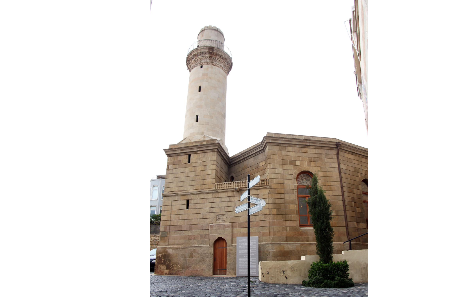
continues to live with us in the present. Our focus today is on the Beyler
Mosque, a work of art in the Old City.
Kurban Said declared that the mosque is the 'stone-clad soul of Asia',
but our heroine is not solely connected to Asia. It is known that Islam, which
came to us in the first half of the 7th century, caused the construction of
religious and architectural monuments. The Beiler Mosque stands out from
similar structures because of its structure and hall volume. In its
construction, European constructive principles (at least identical to Cordoba
Meskita) are combined with the eastern and exclusively local - Bakuvian. Even
the mosque's minaret is decorated with elements typical of Western European
architecture.
Let's go back to where it all started. Murtuza Mukhtarov, a Baku oil
developer and philanthropist whose activities are worthy of a separate article,
provided significant help in constructing the Beiler Mosque on the site of
another ancient mosque in 1895. So, the "Bekskaya" mosque is the
last, and therefore the most modern mosque built in Icherisheher. In 2014, the
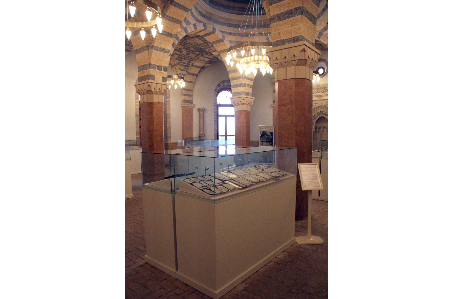
Mosque was restored by Austrian specialist Erich Pummer. Today, the Beiler
Mosque is not just a temple but a museum mosque where you can see the most
exciting exhibitions.
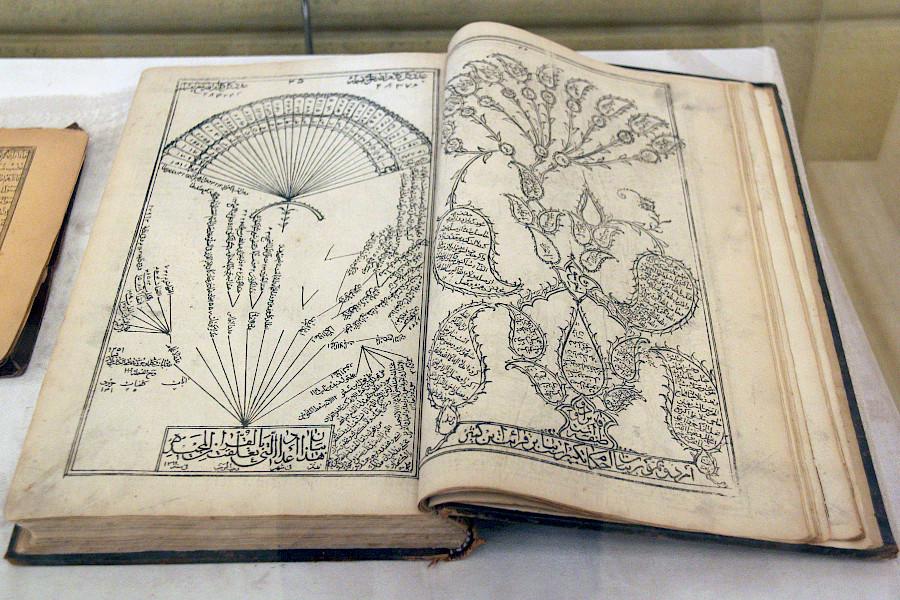
The exhibition 'Sacred Relics' is currently open. It presents ancient
editions of the Koran of different eras collected from all regions of
Azerbaijan. This exhibition arouses interest in the history of its exhibits.
These holy books were preserved and saved at various times. Here, you can see
the Koran belonging to the Derbent Mosque, which was walled up for many years
at a time when the Soviet power forbade any religious attributes. Or pages of
books saved from fire a century earlier. In addition to books in the exhibition
and other sacred exhibits. Notably, the museum exhibits (and there are more
than 70) were collected due to the voluntary transfer of holy books and
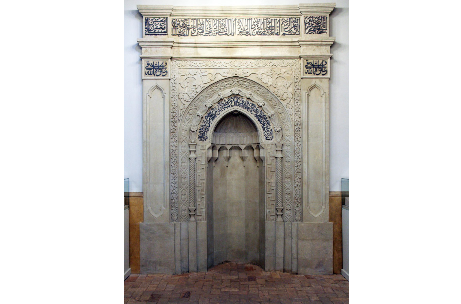
religious attributes from the local population. Pay attention to the details:
doors, shutters, decorated mihrab. [editor’s note Mihrb (Arab.
ylor, - «direction of prayer») - a niche in the wall of the mosque, indicating
the direction to Mecca. It is usually arched, decorated with ornaments and
carvings. It is mentioned in the Qur'an (3:37). At the top of the mihrab are
placed the Qur'anic verses (verse phrases from the Qur'an).]
It's not difficult to locate the Beyler Mosque. Just descend from the
Murad gate of the Shirvanshahs Palace.